What Language Quran Written In? Complete Guide to Quranic Arabic
When people first explore the Quran, one of the most common questions is what language the Quran was written in. The answer is simple at first: the Quran was revealed…
When people first explore the Quran, one of the most common questions is what language the Quran was written in. The answer is simple at first: the Quran was revealed and written in Arabic. Understanding the complete answer, though, means looking deeper into the type of Arabic used, its historical background, and why translations are treated differently from the original Arabic text.
The Quran is written in Classical Arabic, also known as Quranic Arabic — a form of Arabic used in the early Islamic period that became closely connected with Quranic revelation, recitation, and the wider Arabic literary tradition. Understanding the Quran’s language also helps readers explore its history and cultural significance.
What Language Is the Quran Written In?
The Quran was originally revealed in Classical Arabic, the formal literary language associated with the Arabic-speaking world of the 7th century. Muslims believe the Quran was revealed to Prophet Muhammad ﷺ through the Angel Gabriel (Jibril) in Arabic, and the Arabic text remains central to Quran recitation and study today.
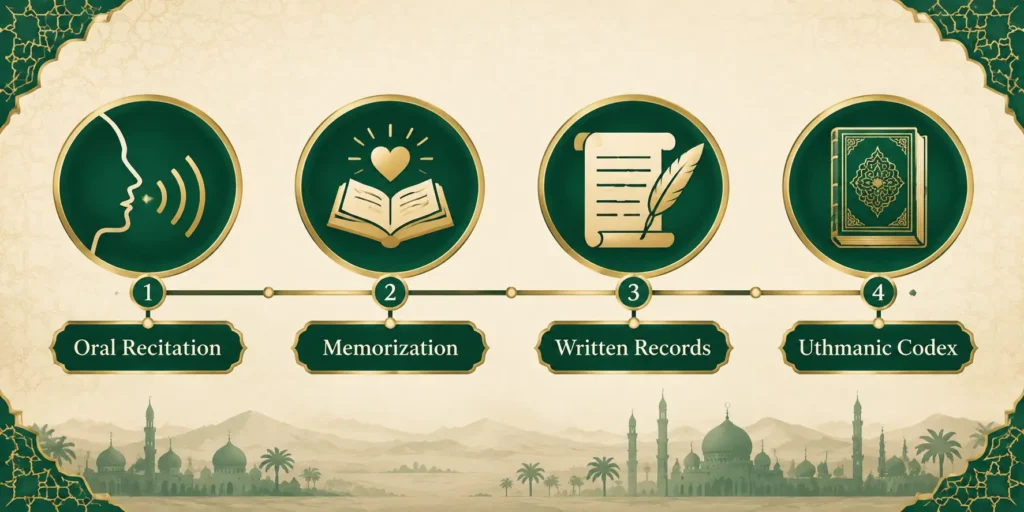
Arabic was the language of the society where the Quran was first revealed. The early Muslim community received the verses through oral recitation, memorized them, and later preserved them in written form — a connection between spoken revelation and written preservation that runs through the entire history of the Quran’s transmission.
Classical Arabic and Quranic Arabic
Classical Arabic is the form of Arabic used in the Quran and many important early Arabic literary works — distinct from the everyday dialects spoken across the Arab world today.
“Quranic Arabic” specifically refers to the language style found in the Quran itself: its vocabulary, grammar, and expressions. Modern Arabic speakers will recognize many of these words, but fully grasping the deeper meanings often calls for dedicated study of Classical Arabic — similar to how a modern English speaker can read Shakespeare but still needs extra context to catch everything being said.
How Quranic Arabic Differs From Modern Arabic
The Quran is not written in modern regional dialects such as Egyptian, Gulf, or Levantine Arabic. It uses Classical Arabic, which developed and was preserved as a formal literary language rather than an everyday spoken one.
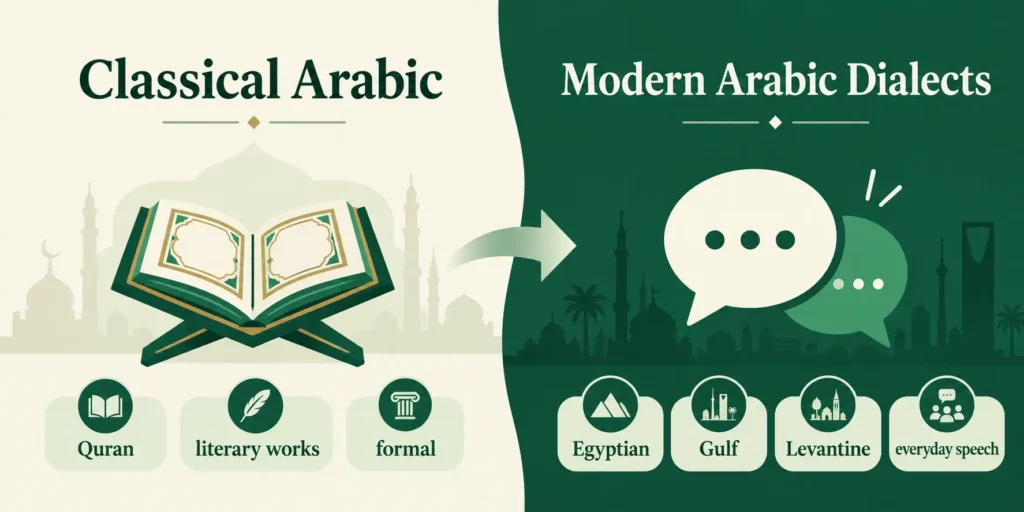
Modern Arabic dialects evolved over centuries through everyday communication and regional change, which is why a native Arabic speaker today may recognize many Quranic words while still needing focused study to fully appreciate the grammar, meaning, and rhetorical style of the text. This gap shows up most clearly in vocabulary and sentence structure, which is what sets Quranic Arabic apart as its own distinct style within the language.
Why Was the Quran Revealed in Arabic?
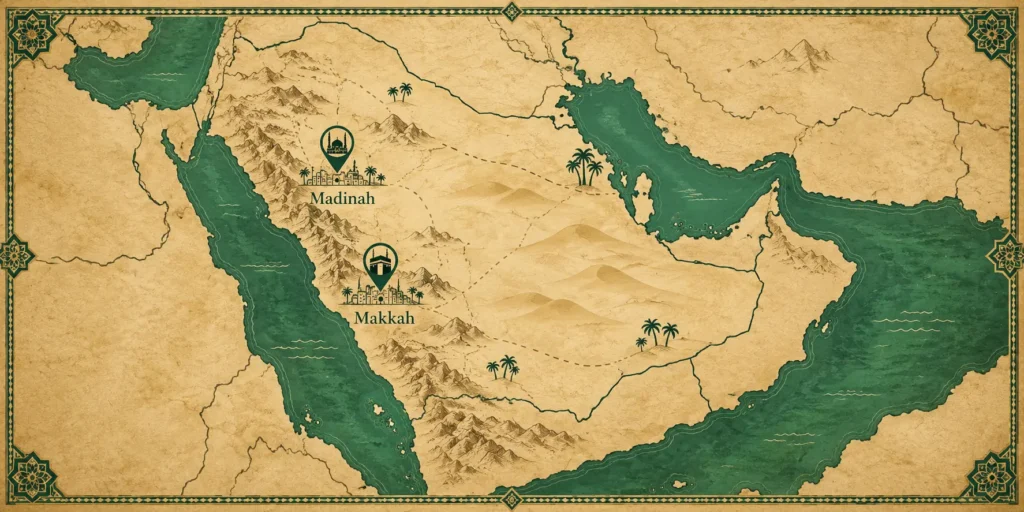
The Quran was revealed in Arabic because it was delivered to an Arabic-speaking community in the Arabian Peninsula, allowing its original audience to understand the message directly in their own language.
Arabic also carried a strong literary tradition at the time — poetry, oral expression, and linguistic skill were central to Arabian culture, and the Quran’s style became one of the most significant examples of Arabic literary expression to emerge from that period.
For Muslims, the Arabic of the Quran also carries lasting spiritual importance. Quran recitation in Arabic remains a core part of Islamic worship, even for Muslims whose daily language is something else entirely.
The Revelation and Preservation of the Quran
The Quran was first transmitted through oral recitation. According to Islamic tradition, Prophet Muhammad ﷺ received revelations over a period of years and taught them to his companions, who memorized and recorded portions of the text as it was revealed.
The shift from purely oral preservation to written manuscripts became a major stage in Quran history. Early written records used whatever materials were available at the time, and later collections helped consolidate the Quranic text into manuscript form — this combination of memorization and written preservation is what kept the Arabic text consistent across generations.
The Standardization of the Quranic Text
As Islam expanded into new regions, preserving one consistent written form became increasingly important. Islamic historical tradition describes the standardization of the Quranic text during the caliphate of Uthman ibn Affan, producing what’s commonly known as the Uthmanic codex.
This standard written form helped maintain consistency among Muslim communities across different regions, and the Quran continued to be copied in Arabic manuscripts, passed down through generations of readers and reciters.
Quranic Manuscripts and Arabic Script
The earliest Quran manuscripts offer a window into how Arabic writing itself developed — early copies were recorded using early forms of Arabic script, including the Hijazi script.
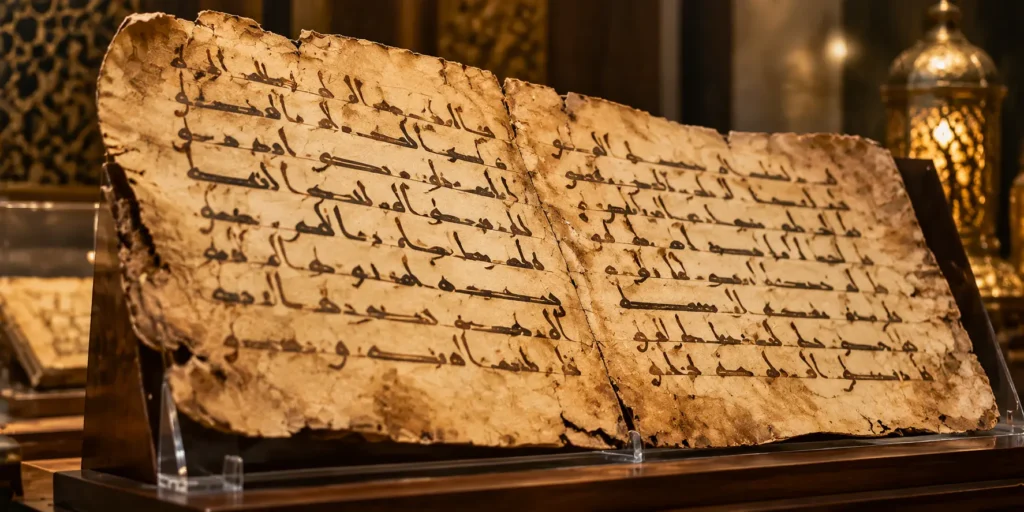
It’s worth separating language from writing system here: Arabic is the language, while Arabic script is simply the writing method used to record it. The Quran’s Arabic text was preserved through manuscripts written in that script, which over time gained additional marks and systems to help readers pronounce words more accurately, forming the basis for Tajweed rules.
The Quran’s Influence on Arabic Language and Literature
The language of the Quran holds deep importance well beyond religious practice. Muslims around the world recite Quranic verses in Arabic during prayer, even when Arabic isn’t their first language — and the Quran’s vocabulary, expressions, and style have shaped generations of Arabic writers, scholars, and linguists.
Because of this influence, studying Classical Arabic in any serious way usually means studying Quranic language too. Much of Arabic grammar and interpretive scholarship developed directly out of efforts to understand the Quran’s meanings and structure, which is why the Quran matters not only as a religious text, but as a major work in the history of Arabic language and literature in its own right.
Translations and the Original Arabic Quran
The Quran has been translated into many languages so people around the world can engage with its message. In Islamic tradition, however, these translations are generally treated as explanations of meaning rather than the original Arabic Quran itself.
This distinction exists because languages rarely carry identical meanings, expressions, and cultural references — a translation can communicate ideas, but reading the Arabic directly is the only way to engage with the original wording. That’s exactly why many Quran learners study Arabic alongside translations, to build a deeper and more direct understanding over time. For beginners starting that journey, our guide on how to read Arabic words is a practical first step.
Conclusion
The answer to what language the Quran was written in is Arabic — specifically Classical Arabic, also known as Quranic Arabic. This distinction matters because the Quran’s language is tied to its history, its preservation, its recitation, and its lasting influence on Arabic culture.
Learning the basic difference between everyday Arabic, Quranic Arabic, and translations clears up much of the confusion beginners run into early on. The language of the Quran isn’t just a vehicle for communication — it’s a key part of understanding the text’s historical and literary significance as well.
FAQs
What language was the Quran originally written in?
The Quran was originally written in Arabic, specifically Classical Arabic — also commonly called Quranic Arabic.
Is the Quran written in modern Arabic?
No. The Quran uses Classical Arabic rather than any modern regional dialect, which developed into different spoken forms over time.
Can Arabic speakers understand the Quran easily?
Arabic speakers can recognize many words, but fully grasping its meaning usually requires dedicated study of Classical Arabic and Quranic vocabulary.
Are Quran translations considered the original Quran?
No. Translations help explain the Quran’s meaning, but in Islamic tradition the original Quran text is the Arabic version.
Why is Arabic important in Quran recitation?
Because Quran recitation is traditionally performed in the original Arabic, preserving the text’s exact wording and pronunciation as it was revealed.

tahamehmood895@gmail.com
tahamehmood895@gmail.com shares helpful Quran learning, Tajweed and Islamic education guidance for Quran Learning UK readers.
Related Quran Learning Guides