Quran Word: Word-by-Word Meaning, Translation, and Quranic Arabic Guide
Many people can read the Arabic letters of the Quran and listen to its beautiful recitation, yet still feel a distance from the message because they don’t understand each word.…

Many people can read the Arabic letters of the Quran and listen to its beautiful recitation, yet still feel a distance from the message because they don’t understand each word. The journey of learning a quran word begins with a simple desire: to connect the original Arabic text with its meaning, making Quran reading more personal and helping learners recognize vocabulary that repeats across different verses.
A quran word is not just a translated term. Each one carries meaning, context, and a connection to the Arabic language the Quran was revealed in. Through word-by-word translation, vocabulary study, and a basic understanding of Arabic roots, learners can gradually build a stronger relationship with the Quranic text.
Quran Word-by-Word Translation
Word-by-word translation helps readers see the direct connection between Arabic words and their meanings. Instead of reading only a complete translated sentence, learners can examine each Arabic term individually and understand how it contributes to the overall meaning of an ayah.
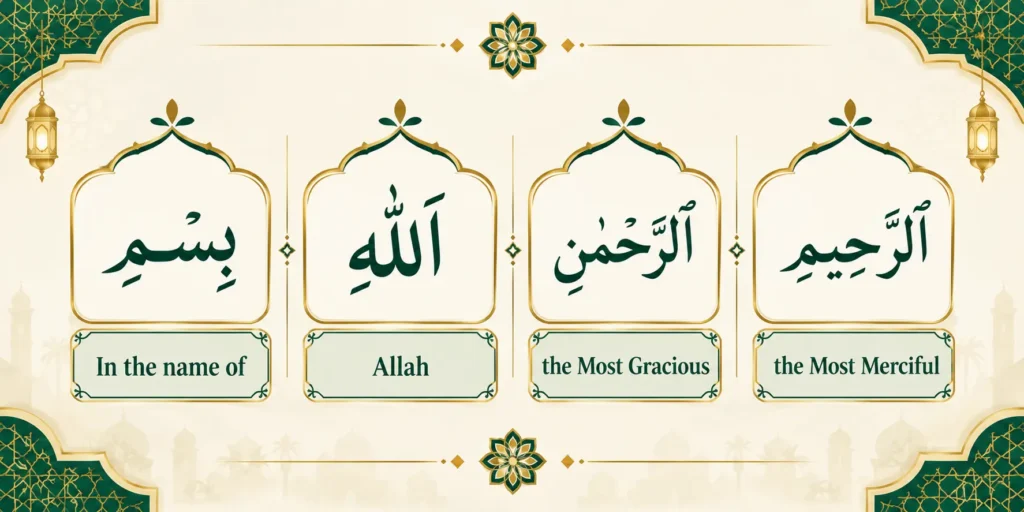
This is especially useful for people who don’t yet read Arabic fluently — it creates a bridge between the original Quranic language and the reader’s own. By seeing Arabic words alongside their English meanings, learners slowly start recognizing familiar vocabulary during recitation.
That said, word-by-word translation works best as a learning tool, not a substitute for studying a verse’s complete context. A single Arabic word can carry different shades of meaning depending on how it appears, so understanding the surrounding message still matters.
Quran Words With English Translation
Many learners begin their study by searching for Quran words with English meanings, which helps them identify common vocabulary and recognize frequently repeated terms. Word-by-word resources often go further, offering translations in languages like Urdu, Hindi, German, and Roman Urdu, making Quranic vocabulary accessible to learners from different backgrounds.
A few common examples to start with:
- Allah — Allah
- Rabb — Lord
- Ayah — Sign or verse
- Kitab — Book
- Huda — Guidance
- Iman — Faith
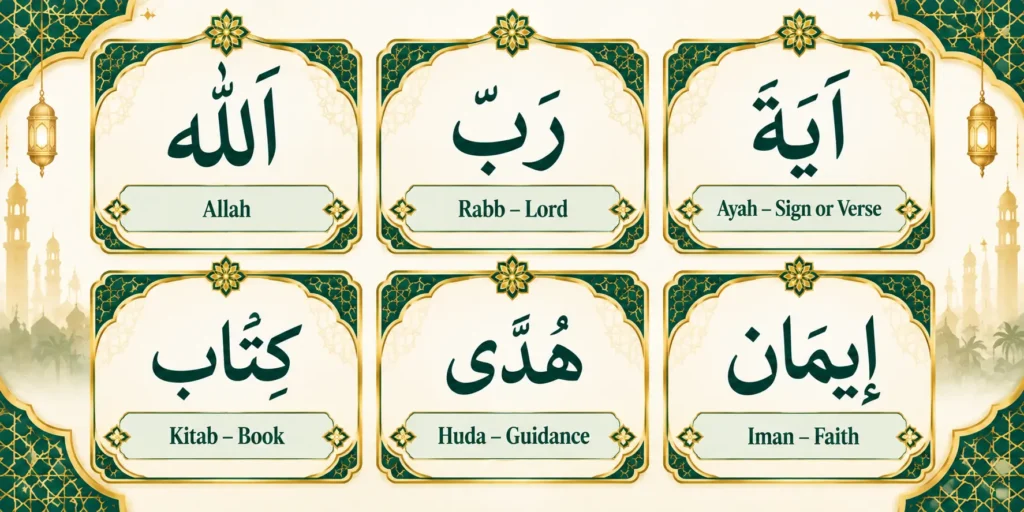
Learning words like these builds a foundation for understanding Quranic vocabulary more broadly. As learners continue, they naturally start recognizing patterns and connecting words to their meanings without having to look each one up.
Understanding Quranic Arabic Words
Quranic Arabic holds special importance as the original language of the Quran, but learning it doesn’t require becoming a full Arabic scholar before you can understand basic vocabulary. If you’re curious about its background, our guide on what language the Quran was written in covers the history of Classical Arabic. Most learners start by focusing on common words and repeated expressions, which goes a long way toward making Arabic feel less distant or difficult.
Arabic also relies heavily on roots that connect related words to one another. Once a learner understands these root connections, recognizing relationships between different Quran words — and appreciating the deeper structure of the language — starts to come much more naturally.
Quran Word Roots and Dictionary Study
A Quran word dictionary lets learners explore meaning beyond a basic translation by studying Arabic roots and seeing how related words appear throughout the Quran. Because Arabic words that share a root often share connected meaning, studying roots helps explain why certain words feel linked in meaning — something a list of isolated vocabulary can’t really show.
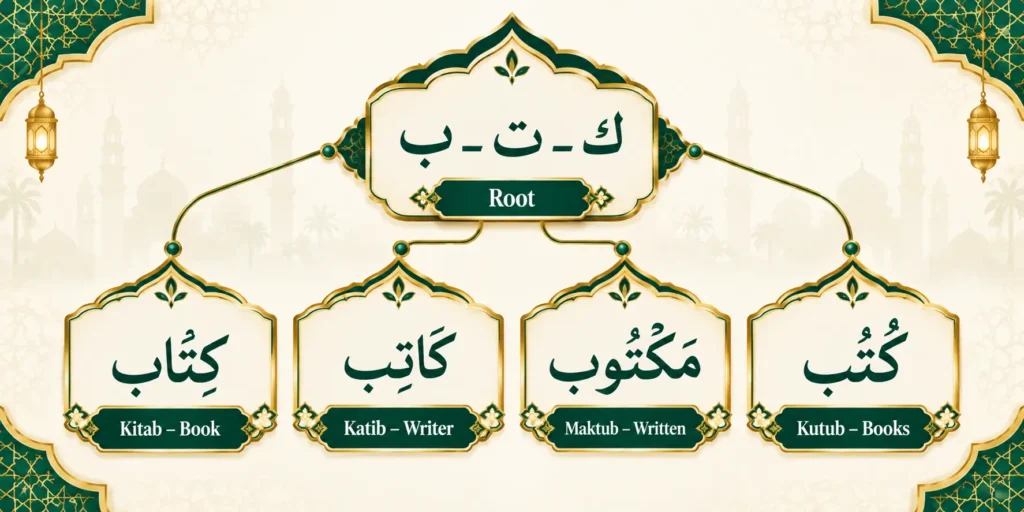
This root-based approach is especially valuable for anyone looking to move past simple translation and toward a deeper understanding of Quranic Arabic.
Morphology, Grammar, and Word Analysis Tools
Morphology explains how Arabic words are formed and how their internal structure shapes meaning. Quranic Arabic resources — including projects like the Quranic Arabic Corpus, which provides annotated grammar and morphology for Quran words — often provide this level of detail for readers who want to go deeper into the language.
Modern word-by-word study tools tend to combine several of these features in one place: translation, transliteration, audio recitation, Tajweed color-coding, tafsir, and morphological breakdowns. A useful way to work through them is to combine:
- Arabic word recognition
- English meaning
- Pronunciation practice
- Verse context
- Root and morphology analysis
Beginners naturally lean on translation and pronunciation first, while more advanced learners get more out of the grammar and structural detail — and that’s exactly how this kind of study should progress: start with meaning, and let grammar and morphology come later, once the basics feel solid.
Quran Chapters and Verses: Word Analysis in Context
A Quran word becomes easier to understand when studied inside its actual verse rather than as an isolated entry on a list. Word-analysis tools that let readers select a chapter, verse, and individual word make this kind of contextual study possible, and it helps prevent the kind of misunderstanding that can happen when a term is read in isolation — a word’s meaning becomes much clearer once it’s connected to the complete verse and message around it.

Learning Through Audio and Pronunciation
Correct pronunciation plays a real role in Quran learning, which is why many word-by-word resources include audio so learners can hear each Arabic word while studying its meaning. Listening helps connect the written Arabic with correct pronunciation, and combining that with translation gives learners a more complete experience — engaging with both the sound and the meaning of the vocabulary at once.
Quran Words in Different Languages
People around the world study Quran vocabulary in different languages, since most Quran learners aren’t native Arabic speakers. English translations help many readers grasp the general meaning, while resources in other languages let people learn in whatever language they’re most comfortable with.
Even so, the original Arabic stays central to all of this — translations explain meaning, but they don’t replace the original Quranic wording. Learning Arabic words alongside translation is what lets readers appreciate both the language itself and the message it carries.
How to Learn Quran Words Effectively
The most practical way to build Quran vocabulary is step by step. A simple path that works for most learners:
- Learn common Quran vocabulary and its meanings.
- Connect words with the verses where they actually appear.
- Practice pronunciation and listening alongside translation.
- Explore roots and grammar once the basics feel comfortable.
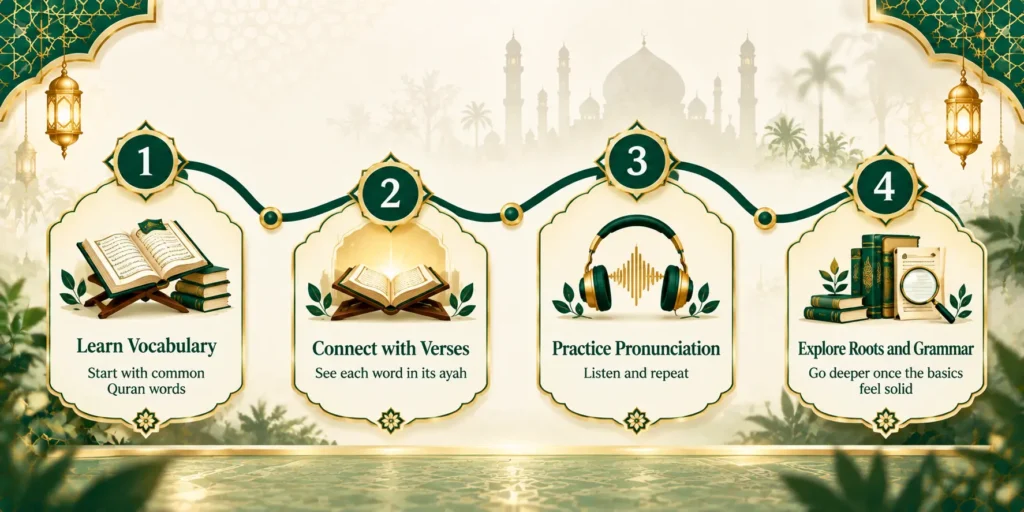
The goal isn’t memorizing as many words as possible — it’s building a real connection between vocabulary, meaning, and context. Even small progress here can make Quran reading feel noticeably more meaningful, since every familiar word adds another layer of understanding to the text.
Conclusion
Learning a quranic word is one of the simplest ways to begin building a closer connection with Quranic Arabic. It doesn’t require mastering the entire Arabic language at once — it starts with individual words, recognizing patterns, and building vocabulary gradually from there.
The most valuable approach combines translation, context, pronunciation, and root understanding together, since word meanings carry far more weight once they’re connected to the verses where they actually appear. A consistent learning method like this can turn Quran reading from simple recitation into something far more thoughtful and meaningful.
Start with just one quran word, understand what it means, and let that understanding grow verse by verse into a deeper connection with the Quranic language.
FAQs
What does a quran word mean?
A quran word refers to a word from the Arabic text of the Quran. Understanding its meaning helps readers connect with the Quran’s message more deeply.
How can I learn Quran words with English meanings?
By using word-by-word translation resources, studying common vocabulary, and connecting Arabic words with their meanings as they appear in actual verses.
Why is Quranic Arabic different from regular Arabic?
Quranic Arabic refers specifically to the Arabic used in the Quran. It has distinct vocabulary, expressions, and linguistic features that learners often study separately from modern Arabic.
What is Quran word morphology?
Quran word morphology explains how Arabic words are formed and how their structure relates to meaning, helping learners understand deeper language patterns.
Is learning Quran words helpful for beginners?
Yes. Learning common Quran vocabulary helps beginners recognize meanings early on and gradually build a stronger understanding of the Quranic text.

tahamehmood895@gmail.com
tahamehmood895@gmail.com shares helpful Quran learning, Tajweed and Islamic education guidance for Quran Learning UK readers.
Related Quran Learning Guides