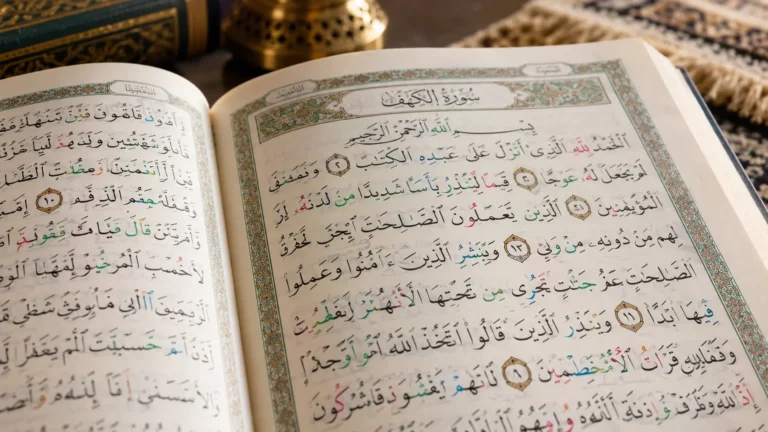
Tajweed Meaning: What Is Tajweed? A Complete Guide to Quran Recitation
Tajweed is not a single rule that changes the way you read the Quran overnight. It is a complete system that teaches how Arabic letters, sounds, and recitation patterns should…

Tajweed is not a single rule that changes the way you read the Quran overnight. It is a complete system that teaches how Arabic letters, sounds, and recitation patterns should be applied.
For beginners, the learning process starts with understanding the foundation of Quran pronunciation. Before moving into advanced rules, a student needs to recognize how letters are produced and how their qualities affect their sounds.
The main areas covered in Tajweed include:
- Makharij al-Huroof (Articulation Points): Learning where each Arabic letter comes from in the mouth or throat.
- Sifaat al-Huroof (Letter Characteristics): Understanding qualities that make letters heavy, light, strong, or soft.
- Noon Sakinah and Tanween Rules: Learning how certain letters change depending on the letters that follow them.
- Meem Sakinah Rules: Understanding how the letter meem is pronounced in different situations.
- Madd Rules: Learning when sounds should be extended and for how long.
- Qalqalah: Understanding the bouncing sound produced by specific letters when they carry sukoon.
- Waqf Rules: Learning where to stop during recitation while protecting the meaning of verses.
These concepts may sound technical at first. However, Tajweed becomes easier when learners study each rule gradually and practice applying it during Quran recitation.
Core Rules of Tajweed Every Beginner Should Understand
Many beginners feel overwhelmed when they first hear Tajweed terms. The key is not to memorize everything at once. Each rule has a specific purpose: helping the reader pronounce Quranic words correctly.
Makharij: The Correct Place of Pronunciation
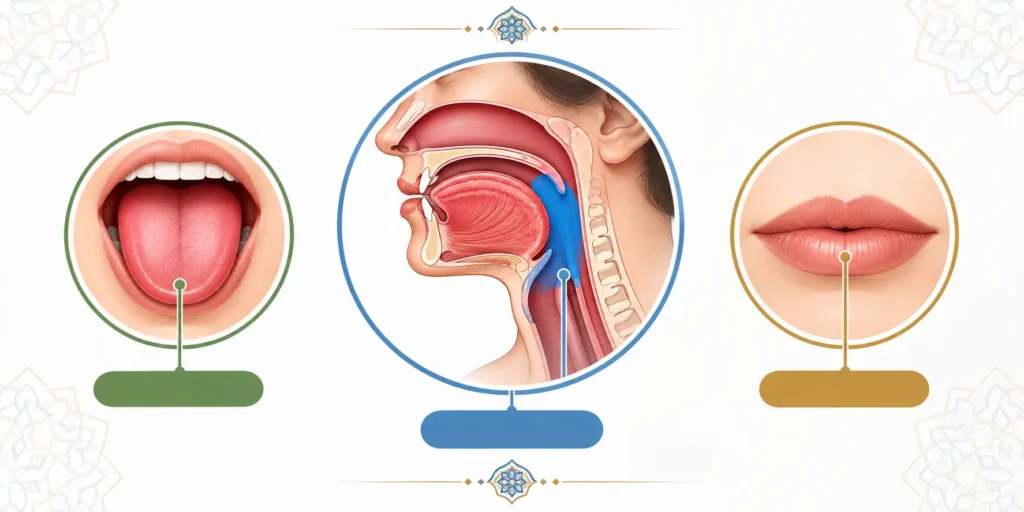
Makharij refers to the points of articulation where Arabic letters originate.
Some letters come from the throat, some from the tongue, and others from the lips. Because Arabic contains sounds that may not exist in English, understanding these points helps learners pronounce letters accurately.
A small difference in pronunciation can affect a word. That is why Tajweed focuses on training the tongue and mouth to produce each letter correctly.
Sifaat: The Characteristics of Arabic Letters
Every Arabic letter has qualities that influence its sound.
Through Sifaat, learners understand why some letters are pronounced with heaviness while others are lighter. This knowledge helps create a balanced and accurate Quran recitation.
Without understanding these characteristics, a reader may pronounce letters correctly in shape but miss the qualities that complete their sound.
Noon Sakinah and Tanween Rules
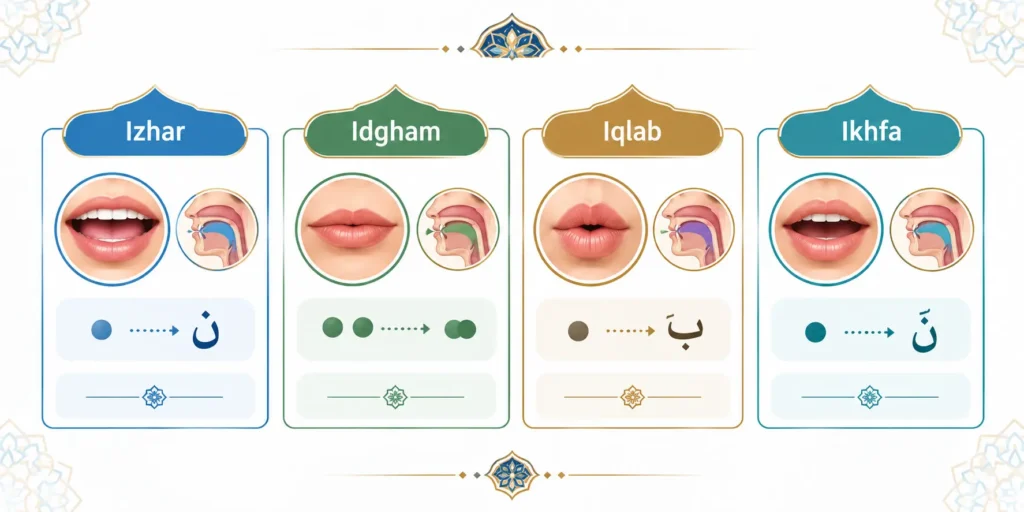
Noon Sakinah and Tanween are among the most common Tajweed topics beginners study.
These rules explain how the sound changes when noon with sukoon or tanween appears before different letters.
The main categories include:
- Izhar
- Idgham
- Iqlab
- Ikhfa
Learning these rules helps readers recognize common pronunciation patterns throughout the Quran.
Madd, Ghunnah, and Qalqalah
Some Tajweed rules focus on controlling specific sounds during recitation.
Madd teaches proper elongation of certain sounds.
Ghunnah explains nasal pronunciation in specific cases.
Qalqalah refers to the echoing or bouncing sound associated with the letters ق، ط، ب، ج، د when they are in a state of sukoon.
These rules help maintain the rhythm and accuracy of Quran recitation.
Mistakes in Quran Recitation and How Tajweed Helps Prevent Them
Tajweed exists to protect the accuracy of Quran recitation.
A mistake in pronunciation can sometimes affect the meaning of a word. Arabic contains letters that may sound similar to learners, especially those who do not speak Arabic as their first language.
There are two general types of mistakes discussed in Tajweed:
- Clear mistakes: Errors that may change the meaning or structure of a word.
- Hidden mistakes: Errors that affect the perfection of pronunciation but may not change the meaning.
For beginners, this does not mean they should feel discouraged. Learning Tajweed is a gradual process. The purpose is improvement, correction, and developing confidence while reciting the Quran.
A structured learning approach, especially one that includes feedback on pronunciation, helps learners identify mistakes they may not notice themselves.
Who Should Learn Tajweed?
Tajweed is for anyone who wants to improve their Quran recitation.
It is not limited to Arabic speakers or advanced students. Beginners, children, adults, and non-Arabic speakers can all benefit from understanding how Quran letters and sounds are formed.
Different learners may have different starting points:
- Children: Often begin by building Arabic reading foundations before studying complete Tajweed rules.
- Adults: May start with basic Quran reading before progressing into pronunciation rules.
- New Muslims: Can learn Tajweed step by step without needing previous Arabic knowledge.
- Hifz students: Need accurate pronunciation because mistakes can become harder to correct after memorization.
The most important step is starting with the correct foundation and learning consistently.
Common Misconceptions About Tajweed
“Tajweed Is Only For Arabs”
This is a common misunderstanding. Tajweed focuses on Quran pronunciation, not nationality.
Arabic speakers also need Tajweed because Quranic pronunciation follows specific rules that are not always the same as everyday Arabic speech.
“Tajweed Is Only About Making Recitation Sound Beautiful”
Tajweed does make recitation more pleasant, but beauty is not its only purpose.
The foundation of Tajweed is accuracy. A beautiful sound comes from correctly applying the rules of Quran recitation.
“I Can Learn Tajweed Without Any Feedback”
Books, videos, and apps can introduce Tajweed concepts. However, pronunciation is a practical skill that improves when someone listens and corrects mistakes.
A learner may not always notice their own pronunciation errors. That is why guided learning can be valuable when building strong foundations.
How to Start Learning Tajweed
Starting Tajweed does not require mastering every rule immediately.
A beginner-friendly path usually begins with:

- Learning or improving Arabic reading skills.
- Understanding basic pronunciation rules.
- Practicing common Tajweed concepts.
- Applying rules while reading Quran.
- Receiving correction to improve accuracy.
For beginners, using a Tajweed Mushaf can also help connect the rules they learn with the color indicators used during Quran reading.
For learners who want structured guidance, a dedicated learning program can provide step-by-step lessons, teacher feedback, and a clear path from basic concepts to stronger Quran recitation skills.
Tajweed vs Tarteel vs Qira’at: Understanding the Difference
When learning about Quran recitation, beginners often come across terms like Tajweed, Tarteel, and Qira’at. These words are connected, but they do not mean the same thing.
Understanding the difference makes the learning process clearer.
| Term | Meaning | Main Focus |
| Tajweed | The rules of correct Quran pronunciation | How each letter and sound should be recited |
| Tarteel | Measured and careful recitation | The pace, clarity, and thoughtful style of reading |
| Qira’at | Authenticated Quran recitation traditions | Different transmitted methods of Quran recitation |
The rules of Tajweed guide the reader in areas such as letter articulation, pronunciation, elongation, pauses, and other aspects of Quranic recitation.
Tarteel focuses on the manner of recitation. It encourages clear, measured reading rather than rushing through verses.
Qira’at refers to recognized recitation traditions that have been transmitted through established chains. While these concepts are related, learning Tajweed gives beginners the foundation they need to improve their Quran recitation.
A Brief History of Tajweed
Tajweed was not created as an additional style added to Quran recitation. It represents the careful way the Quran was recited and passed from one generation to another.
The Prophet Muhammad ﷺ received the Quran through revelation and taught its recitation to his companions. They preserved the pronunciation, articulation, and recitation style and passed it forward.
In the early generations of Islam, many Tajweed principles were naturally applied because Arabic was the everyday language of the people. However, as Islam spread to different regions and more non-Arab communities learned the Quran, scholars began organizing these principles into written teachings.
Over time, scholars documented areas such as:
- Letter articulation points
- Letter characteristics
- Recitation rules
- Proper stopping points
This written knowledge helped preserve accurate Quran recitation for learners across different languages and backgrounds.
Why Proper Quran Pronunciation Matters
Learning Tajweed helps Muslims recite the Quran carefully and pronounce its Arabic letters and words correctly. The rules of Tajweed guide the reader in areas such as letter articulation, pronunciation, elongation, pauses, and other aspects of Quranic recitation. Learning these rules can help reduce pronunciation mistakes and improve the accuracy and clarity of recitation. For beginners, the goal is not to master every technical rule at once, but to gradually build correct pronunciation and apply what they learn while reading the Quran. Regular practice and feedback from a qualified teacher can make this process easier and more effective.
How to Choose the Right Way to Learn Tajweed
Learning Tajweed requires more than simply knowing the names of rules. A student needs to understand how those rules apply during actual recitation.
The most useful learning approach focuses on:
- Understanding the purpose behind each rule
- Practicing pronunciation
- Identifying personal mistakes
- Receiving correction when needed
Many beginners struggle because they try to memorize rules without applying them. Tajweed becomes meaningful when knowledge and practice come together.
For students who prefer a structured learning path, an organized program can provide lessons designed around their current level and help them progress step by step.
For learners who prefer online instruction, choosing the best online Tajweed course can provide clear lessons, pronunciation practice, and regular feedback.
Conclusion
Tajweed meaning goes beyond a simple definition of pronunciation rules. It represents the careful method of reciting the Quran with accuracy, respect, and attention to every letter.
For beginners, the biggest challenge is often not the difficulty of Tajweed itself, but understanding where to start. The right foundation makes the process much clearer. Learning articulation points, basic rules, and correct pronunciation step by step creates confidence over time.
Tajweed should be approached as a skill to develop, not a subject to fear. A learner does not need to know everything on the first day. What matters most is building correct habits from the beginning and continuing to improve.
For those who want guided support, a structured best online tajweed course can provide the learning path, practice, and feedback needed to strengthen Quran recitation with confidence.
Frequently Asked Questions About Tajweed
What does Tajweed mean?
Tajweed means improving and perfecting Quran recitation by applying rules that guide pronunciation, articulation, and sound. The word comes from the Arabic root related to excellence and doing something well.
Why is Tajweed important for Quran recitation?
Tajweed helps protect the correct pronunciation of Quranic words and supports accurate recitation. It guides learners in giving each letter its proper sound and characteristics.
Can beginners learn Tajweed without knowing Arabic?
Yes, beginners who do not speak Arabic can learn Tajweed step by step. Learning focuses on Quran pronunciation and letter sounds, so students can build their skills gradually.
Is Tajweed only for advanced Quran students?
No, Tajweed is not only for advanced learners. Anyone who wants to improve their Quran recitation can begin learning the basic rules and develop from there.
What is the best way to learn Tajweed?
The best approach depends on the learner’s level, but structured learning with explanation, practice, and pronunciation correction helps students build stronger foundations.

tahamehmood895@gmail.com
tahamehmood895@gmail.com shares helpful Quran learning, Tajweed and Islamic education guidance for Quran Learning UK readers.
Related Quran Learning Guides