
Arabic Alphabet for Kids: Learn Arabic Letters from Alif to Ya
Introduction When a child grows up learning English letters, Arabic letters can feel completely unfamiliar at first. Parents often wonder where to begin, which letters to teach first, and how…
Introduction
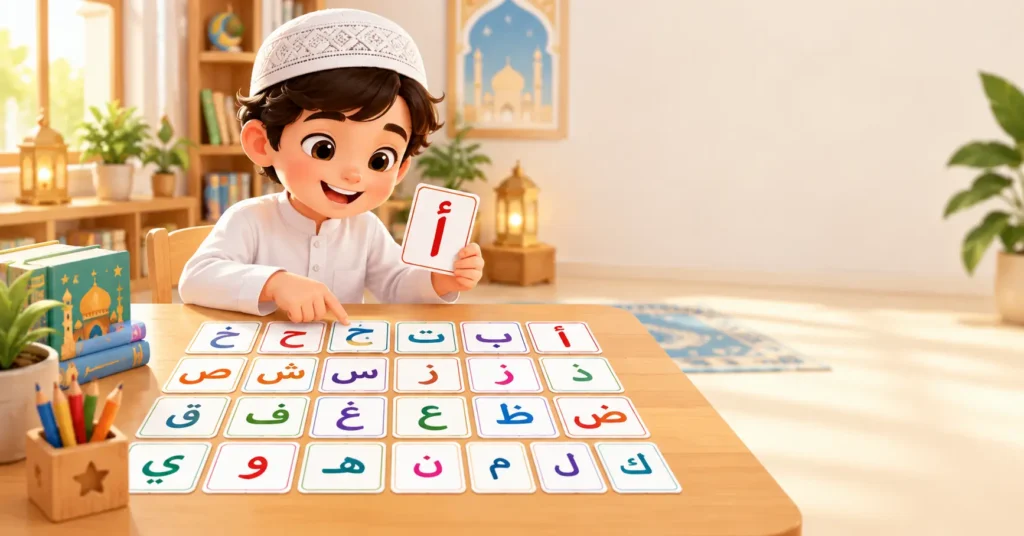
When a child grows up learning English letters, Arabic letters can feel completely unfamiliar at first. Parents often wonder where to begin, which letters to teach first, and how to make learning enjoyable instead of stressful. The Arabic alphabet for kids becomes much easier when children learn it step by step, starting with recognizing letters, understanding sounds, and practicing writing.
The goal is not just to help children memorize shapes. They need to connect each letter with its sound and gradually build confidence reading Arabic. A simple learning path can turn those first confusing letters into something familiar and exciting.
Arabic Alphabet Lesson Introduction
The Arabic alphabet is the foundation for learning to read Arabic. Before children read words, they first need to recognize individual letters and understand how those letters work.
Arabic uses a different writing system from English. Children learn letters from right to left, and each letter has its own shape and sound. This difference can feel challenging at the beginning, but a clear learning structure makes the process easier.
A helpful starting point is to introduce:
- Arabic letter shapes
- Letter names
- Letter sounds
- Simple words connected to letters
- Basic writing practice
Children usually respond better when letters are introduced visually. A letter on its own may seem difficult, but adding a picture, sound, or familiar word can make it easier to remember.
Arabic Alphabet Chart for Children
A complete Arabic alphabet chart helps children see the full picture before focusing on individual letters.
The Arabic alphabet contains 28 letters. Each letter has:
<table> <thead> <tr><th>Arabic Letter Learning Element</th><th>What Children Learn</th></tr> </thead> <tbody> <tr><td>Letter shape</td><td>How the Arabic character looks</td></tr> <tr><td>Letter name</td><td>What the letter is called</td></tr> <tr><td>Letter sound</td><td>How the letter is pronounced</td></tr> <tr><td>Example words</td><td>How the letter appears in vocabulary</td></tr> </tbody> </table>
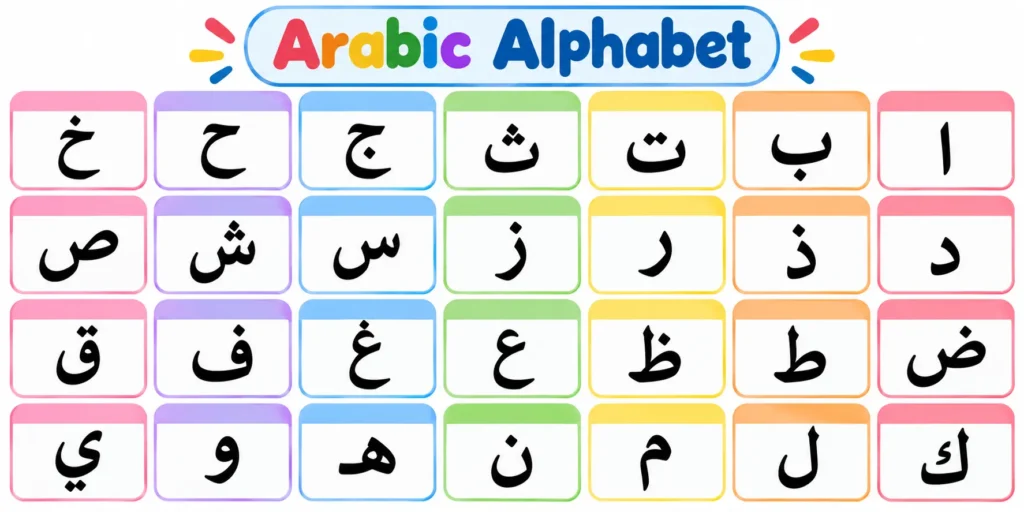
A chart is useful because children can slowly become familiar with the alphabet instead of trying to learn everything at once.
For younger learners, visual repetition works better than simply reading a list of letters. Flashcards, charts, and picture-based activities can make practice feel more like a game.
Learn the Arabic Alphabet from Alif to Ya
Learning Arabic letters from Alif to Ya gives children a clear path through the alphabet. Instead of seeing 28 unfamiliar symbols, they can approach each letter one by one.
The first stage is recognition. Children learn to identify a letter when they see it. After that, they connect the letter with its sound and begin practicing how it is written.
A simple learning order includes:
- Recognize the letter shape.
- Learn the letter name.
- Practice the sound.
- Connect the letter with words.
- Practice writing the letter.
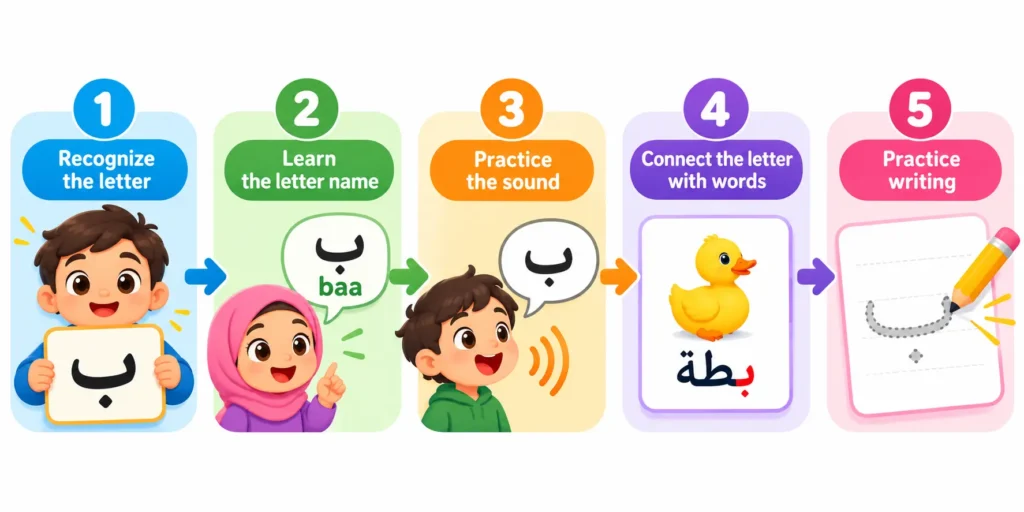
This approach helps children build confidence gradually.
Arabic Letters with Words: Building Vocabulary Through the Alphabet
Letters become easier to remember when children see them connected to words. Vocabulary activities help children understand that letters are not only symbols but also building blocks of the Arabic language.
For example, learning a letter along with a related word helps children create a stronger connection between the shape and meaning.
A child-friendly lesson can include:
- The Arabic letter
- The pronunciation
- A simple vocabulary word
- A picture association
- Writing practice
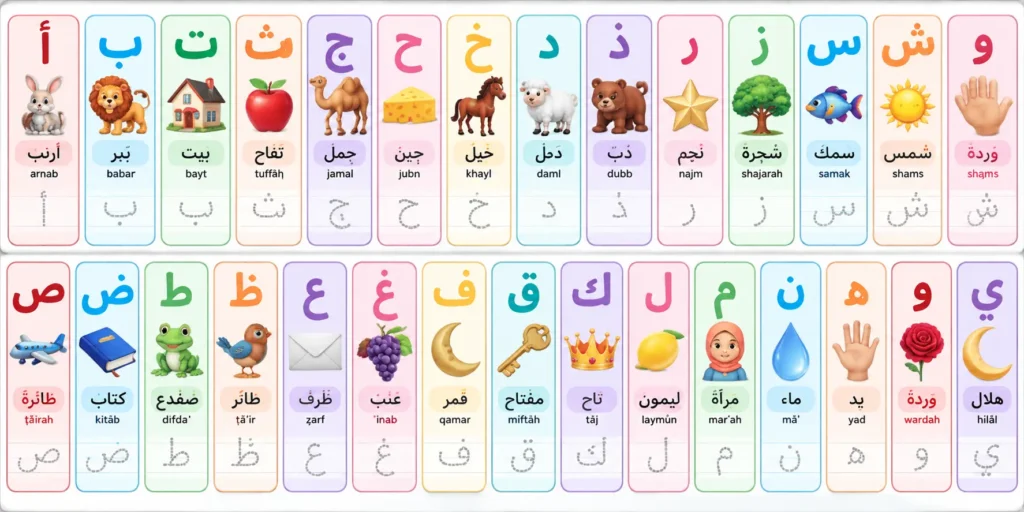
This makes alphabet learning more interactive and keeps children involved.
Arabic Alphabet Letters and Their Sounds
Learning sounds is one of the most important steps in Arabic reading. A child who recognizes letters but does not understand their sounds will find reading difficult later.
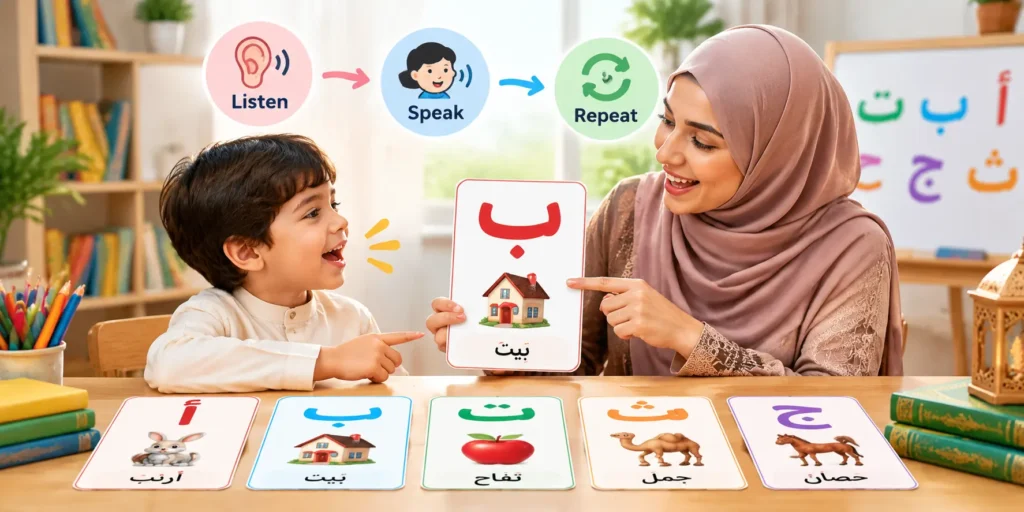
Parents should focus on helping children hear and repeat each letter correctly. Listening first helps children connect what they see with what they say.
Arabic Letters Similar to English Sounds
Some Arabic letters have sounds that feel easier because children may already know similar sounds from English. Starting with these familiar sounds can help children gain early confidence. That said, children should still learn the correct Arabic pronunciation instead of replacing it with an English approximation.
Arabic Letters With Unique Sounds
Other Arabic letters have sounds that are not common in English and may require more listening and practice. The best approach is patience — children do not need to master every difficult sound immediately. Repeated exposure through listening, speaking, and reading practice helps them become more comfortable over time.
How to Read Arabic Letters
Recognizing letters is the first step toward reading Arabic. Children gradually move from individual letters to combining sounds and reading simple words. The reading journey usually follows this path:
Letter recognition → Letter sounds → Understanding vowel marks → Connecting letters → Reading simple Arabic words
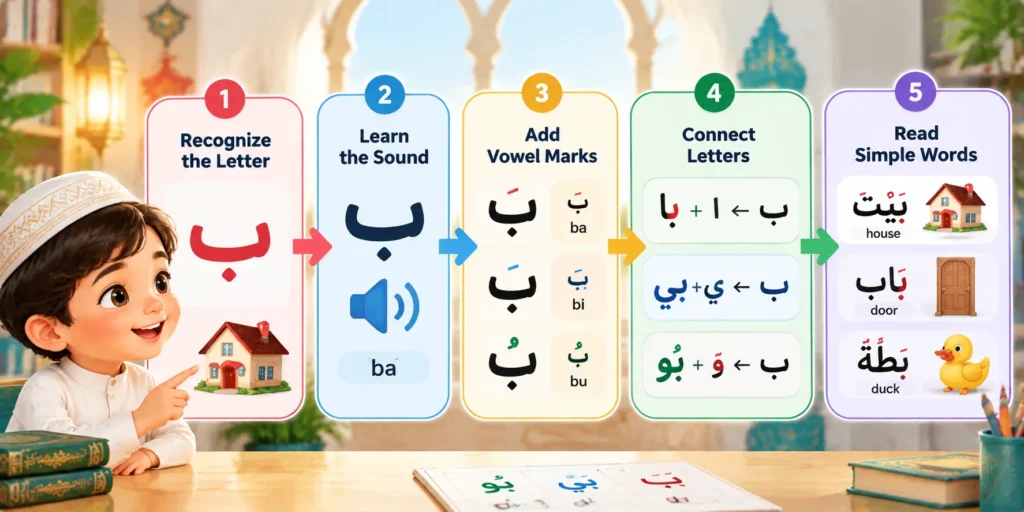
This progression helps children understand how Arabic reading works instead of only memorizing isolated characters.
Arabic Writing System and Reading Direction
Arabic writing works differently from English because it is written from right to left. For children who are used to English, this may feel unusual at first, but consistent practice helps them become comfortable with the direction and flow of Arabic writing.
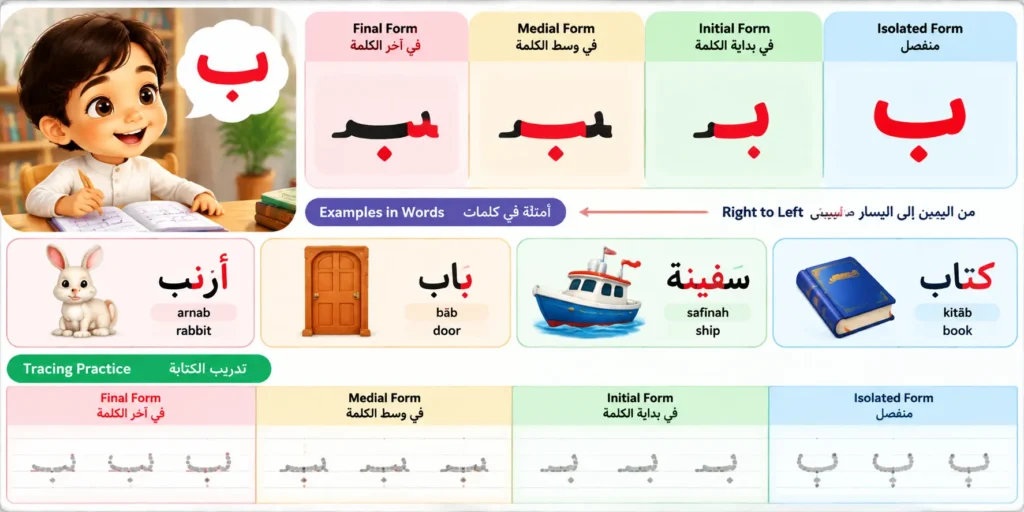
Children also learn that Arabic letters can change shape depending on their position in a word. Understanding this difference prepares them for reading connected Arabic text.
Arabic Alphabet Vowel Marks
After children become comfortable with Arabic letters and their sounds, the next step is learning vowel marks. These small marks help children understand how letters are pronounced when they appear in words.
For beginners, vowel marks make reading clearer because children can see the sound connected to each letter. They provide a bridge between recognizing letters and reading Arabic combinations.
The three basic vowel marks introduced in beginner Arabic lessons are:
<table> <thead> <tr><th>Vowel Mark</th><th>Arabic Name</th><th>Purpose</th></tr> </thead> <tbody> <tr><td>َ</td><td>Fathah</td><td>Helps children recognize the “a” sound with a letter</td></tr> <tr><td>ِ</td><td>Kasrah</td><td>Helps children recognize the “i” sound with a letter</td></tr> <tr><td>ُ</td><td>Dammah</td><td>Helps children recognize the “u” sound with a letter</td></tr> </tbody> </table>
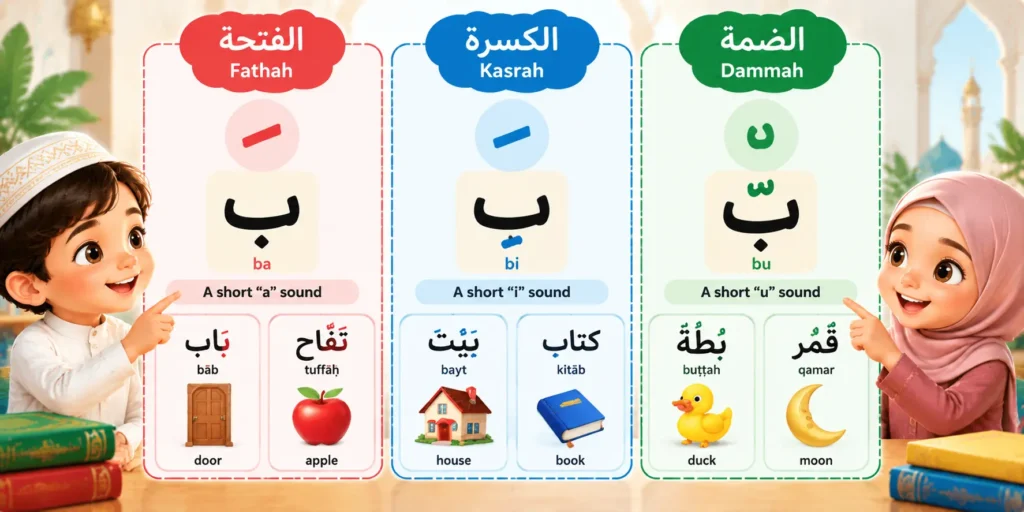
Learning these marks slowly helps children understand that Arabic reading is not only about recognizing letters. Sounds and marks work together to create readable words.
Fathah is one of the first vowel marks children learn. It helps children understand how a letter is pronounced with a short vowel sound. When teaching it, the focus should stay on listening and repeating rather than memorizing rules: look at the letter, notice the vowel mark, say the sound, repeat the combination. This creates a foundation for reading simple Arabic words later.
Kasrah introduces another sound pattern for children. Children often understand it better when they practice it alongside letters they already recognize, which keeps the lesson connected to previous learning instead of introducing too much new information at once.
Dammah helps children learn another common Arabic vowel sound. By practicing all three vowel marks with familiar letters, children slowly become comfortable reading Arabic combinations. The main goal at this stage is confidence — children should feel that Arabic reading is something they can learn step by step.
Arabic Alphabet Practice Activities for Kids
Children learn better when they actively participate. Alphabet practice should not feel like only memorization — instead, activities can help children recognize letters, remember sounds, and enjoy learning.
Useful practice activities include:
- Arabic letter flashcards
- Letter matching activities
- Coloring activities
- Tracing exercises
- Vocabulary games
- Reading practice
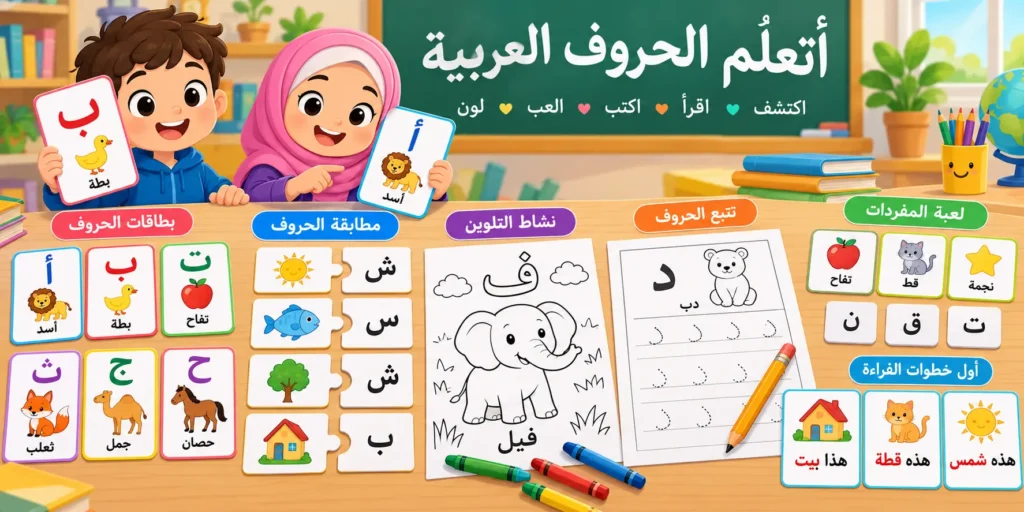
The best activities connect seeing, hearing, and writing. For example, a child can look at a letter, say its sound, and practice writing its shape.
Letter Recognition Practice
Letter recognition is the first skill children need before reading Arabic. Some Arabic letters have similar shapes, so children benefit from repeated visual practice that helps them notice small differences between letters. A recognition activity can focus on finding a specific letter, matching letters with pictures, identifying letters in their different forms, and reviewing previously learned letters. The purpose is not speed — it’s helping children feel familiar with Arabic letters.
Letter Tracing Practice
Writing practice helps children remember letter shapes. Tracing allows children to follow the movement of each letter before writing independently, focusing on correct letter direction, understanding the shape, and repeating the writing movement. Children should become comfortable with the shape before moving toward more advanced writing practice.
Connecting Letters
One important difference between Arabic and English is that Arabic letters connect when they appear in words. Children who have only learned individual letters may feel surprised the first time they see letters joined together, so a gradual approach works best: first learn the individual letter, then recognize how it looks when connected, and finally practice reading simple combinations. Understanding connected letters helps children move from alphabet learning toward actual Arabic reading.
Arabic Reading Practice for Beginners
After learning letters, sounds, and basic vowel marks, children can begin beginner reading practice. Reading practice should build confidence slowly, letting children work with what they’ve already learned before moving to more challenging combinations.
A beginner reading path can be organized into small stages:
- Letter Recognition — children review letters and confirm their shapes and sounds.
- Sound Combination — children begin connecting individual sounds together.
- Vowel Practice — children practice reading letters together with their vowel marks.
- Connected Reading — children become familiar with letters as they appear joined inside words.
- Beginner Word Reading — children bring their skills together to read simple Arabic words.
This gradual approach prevents children from feeling overwhelmed, since each stage builds directly on the one before it.
Revision and Exercises
Revision helps children retain what they have learned — most children need repeated practice before letters become natural. A good revision session can include reviewing familiar letters, practicing sounds, repeating writing activities, and reading previously learned combinations.
The purpose of revision is not to make learning harder. It gives children more confidence with skills they’ve already started building.
Exercises can also support different learning styles — some children remember better through pictures, others through writing or repeating sounds. Useful exercise types include matching letters, tracing letters, recognizing sounds, connecting letters, and reading practice. Parents and teachers can choose activities based on what keeps a particular child engaged.
How to Teach Arabic Alphabet to Kids at Home
Teaching Arabic at home does not require complicated lessons. The most practical approach is to create a clear learning routine that children can follow comfortably:
- Introduce letters slowly
- Practice sounds clearly
- Use visual learning tools
- Repeat familiar lessons
- Add writing practice
The biggest mistake is trying to rush through the alphabet. Children need time to recognize and understand each letter, and a supportive learning environment makes them more comfortable asking questions and practicing new sounds.
Best Ways for Kids to Remember Arabic Letters
Children remember letters better when they connect them with different types of learning — seeing the letter through charts or flashcards, hearing the pronunciation, writing the letter, and connecting it with words. Learning becomes stronger when children use more than one of these approaches together rather than relying on just one.
Arabic Alphabet Learning Resources for Kids
Learning resources can make practice easier and more enjoyable. Helpful resources include Arabic alphabet charts, flashcards, printable worksheets, tracing activities, vocabulary materials, and interactive learning tools. The right resources should match the child’s learning stage — a beginner needs clear letter practice before moving into more advanced reading.
Getting Ready for the Next Arabic Lesson
Once children understand the alphabet foundation, they can continue developing their Arabic reading skills. The next steps usually build on letter recognition, sound understanding, vowel marks, connected letters, and reading practice. For a deeper look at this next stage, our guide on how to read Arabic words walks through that process step by step.
A strong alphabet foundation makes future Arabic learning easier because children understand how letters work together.
Conclusion
Learning the Arabic alphabet is the first step toward helping children connect with the Arabic language. The process becomes much easier when children move in the right order: recognizing letters, learning sounds, practicing writing, and gradually building reading skills.
The best approach is not to rush children into memorizing letters quickly — it’s better to help them feel comfortable with Arabic from the beginning. When learning feels approachable and enjoyable, children are more likely to stay interested and continue developing their skills. A strong alphabet foundation gives them confidence for the next stages of Arabic learning.
Frequently Asked Questions About Arabic Alphabet for Kids
How many letters are in the Arabic alphabet?
The Arabic alphabet has 28 letters. Children learn these letters gradually by recognizing their shapes, names, and sounds.
What age should kids start learning Arabic letters?
Children can begin learning Arabic letters when they are ready for basic language activities. Early learning can focus on recognition, sounds, and simple exposure.
Is the Arabic alphabet difficult for children to learn?
The Arabic alphabet may look unfamiliar at first, but children can learn it step by step. A structured approach with letters, sounds, and practice makes learning easier.
How can my child remember Arabic letters?
Children can remember letters better by combining visual practice, pronunciation, writing, and vocabulary activities. Repetition helps strengthen recognition.
Does learning the Arabic alphabet help children read Quran?
Learning Arabic letters provides the foundation for reading Arabic text. Children who build alphabet skills can continue toward more advanced Arabic reading, including the Quran.

tahamehmood895@gmail.com
tahamehmood895@gmail.com shares helpful Quran learning, Tajweed and Islamic education guidance for Quran Learning UK readers.