Surah Al Kahf in English – Translation, Meaning and Benefits
Reading Surah Al Kahf in English can feel difficult when Arabic isn’t your first language. You may recognise the verses but struggle to understand their message. An English translation helps…
Reading Surah Al Kahf in English can feel difficult when Arabic isn’t your first language. You may recognise the verses but struggle to understand their message. An English translation helps you follow the chapter’s stories, teachings, and reminders.
Surah Al-Kahf is the 18th chapter of the Holy Quran, known in English as “The Cave.” The chapter explores faith, wealth, knowledge, and responsibility through powerful narratives, and points to the temporary nature of worldly life.
Many Muslims make a habit of reading it on Friday, and reading it with a reliable tafsir helps you appreciate the lessons behind its verses.
About Surah Al-Kahf
Surah Al-Kahf takes its name from the account of young believers who sought refuge in a cave to protect their faith.
- Arabic name: سورة الكهف
- English meaning: The Cave
- Chapter number: 18
- Total verses: 110
- Revelation: Meccan
- Juz: 15 and 16
- Main themes: Faith, wealth, knowledge, and power
Rather than telling one continuous story, the chapter introduces four different experiences that reveal related spiritual lessons.
Why Is It Called The Cave?
Al-Kahf means “The Cave.” The name refers to the People of the Cave, young believers who fled religious persecution. The cave stands for refuge during a hard test, where protection came from Allah rather than from ordinary human expectations.
Reading Surah Al-Kahf in English
For the complete chapter, use a reliable Quran platform such as Quran.com that names its translator and keeps the original verse order. Two widely used English translations are Saheeh International and The Clear Quran by Mustafa Khattab. The verses quoted in this guide follow Sahih International.
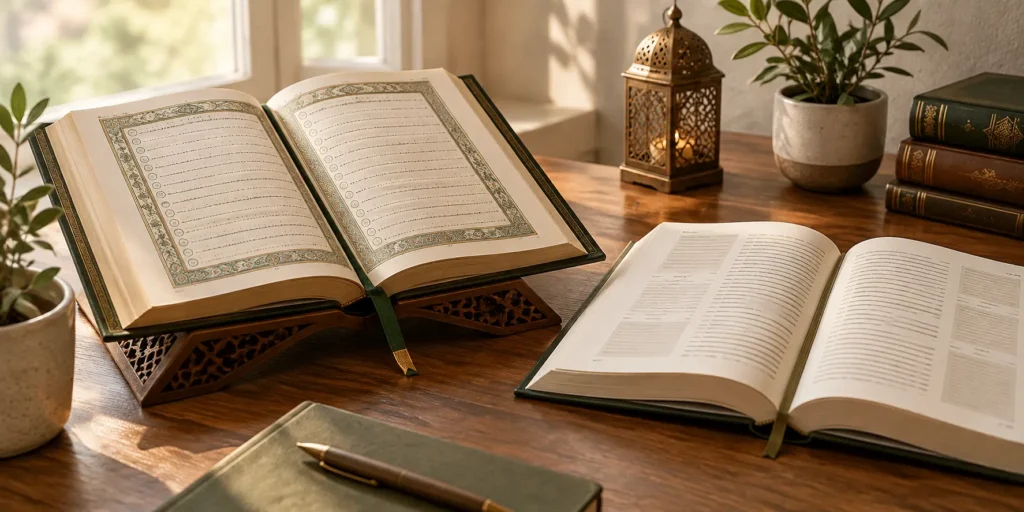
Show the verse number, Arabic text, and English translation separately, and keep the Arabic beside the English. A translation conveys the meaning but never replaces the original Arabic Quran.
For quick reference, verse 1 and the dua of verse 10 are quoted in full under The First Ten Verses below.
Transliteration and Audio
Transliteration writes Arabic pronunciation in Latin letters, which helps while you are still learning the script. It can’t capture every Arabic sound, so pair it with a qualified reciter such as Mishary Rashid Alafasy and follow the written verses as you listen. Word-by-word resources are useful when you want to understand individual terms.
The Four Major Stories
Each of the four stories presents a different test, and all of them point back to human limitation and dependence on Allah.
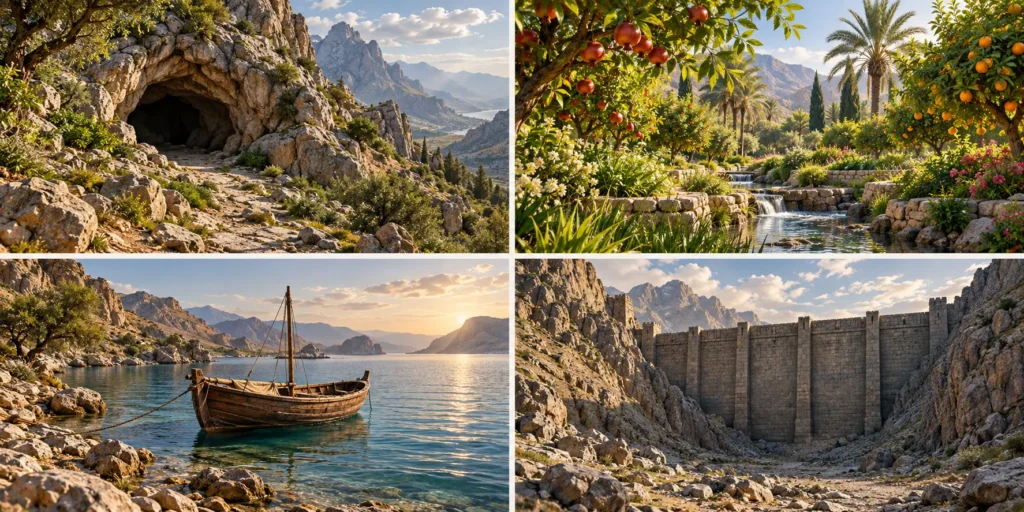
- People of the Cave (verses 9–26) — faith and perseverance
- Two Garden Owners (verses 32–44) — wealth and gratitude
- Musa and Khidr (verses 60–82) — knowledge and patience
- Dhul-Qarnayn (verses 83–98) — power and responsibility
The People of the Cave: Faith During Hardship
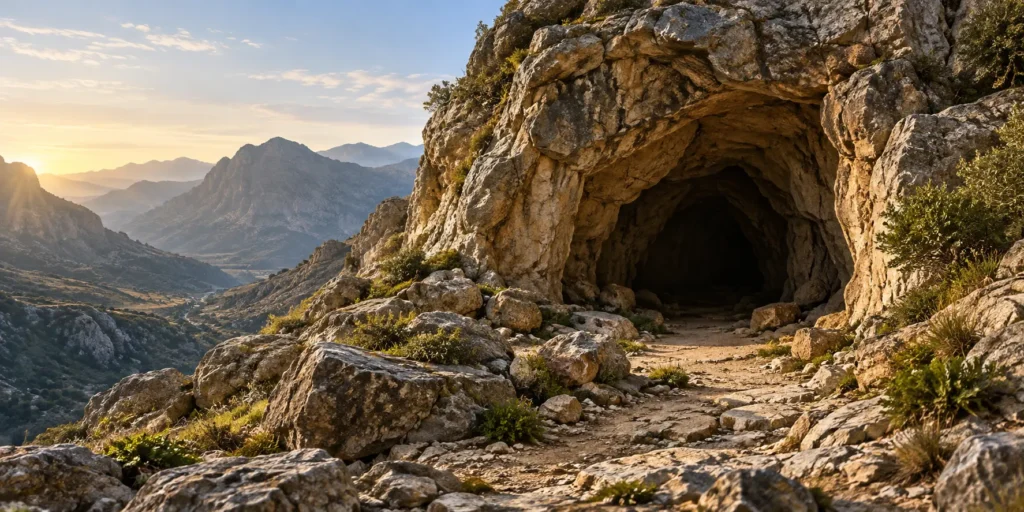
Young believers took refuge in a cave to protect their faith, and Allah protected them. Their story shows that real security doesn’t come from wealth, status, or influence, but from trust in Allah.
The Two Garden Owners: Wealth and Gratitude

One garden owner treats his harvest as permanent and entirely his own achievement, and his pride ends in loss. The story doesn’t condemn wealth itself. It condemns forgetting who gave it.
Musa and Khidr: Knowledge, Patience and Divine Wisdom
Musa meets events that seem wrong to him, and only later do the explanations show what he couldn’t see. Our information is often incomplete, so patience and humility have to go with the search for knowledge.
Dhul-Qarnayn: Justice and Responsible Leadership
A powerful ruler uses his authority to help people, including building a barrier against Ya’juj and Ma’juj (Gog and Magog). Power here is a responsibility to act justly, not a reason for arrogance.
Surah Al-Kahf on Friday: Reported Virtues
Surah Al-Kahf has a special association with Friday. A report recorded by Al-Hakim and Al-Bayhaqi says that whoever recites it on Friday will have light shine for them from one Friday to the next. Narrations differ in wording and grading, so attribute each virtue to its specific report instead of repeating widely shared claims.
Keep these Friday reports separate from the narrations about memorising the surah and protection from the Dajjal. They are related, but they are different claims.
The First and Last Ten Verses
Sahih Muslim (hadith 809) connects memorising ten verses of Surah Al-Kahf with protection from the trial of the Dajjal, with narrations referring to either the opening or the closing verses. That is why many Muslims give these portions special attention.
The First Ten Verses
The opening verses introduce revelation, faith, accountability, and the temporary nature of worldly life, then lead into the People of the Cave. The surah begins:
(1) الْحَمْدُ لِلَّهِ الَّذِي أَنزَلَ عَلَىٰ عَبْدِهِ الْكِتَابَ وَلَمْ يَجْعَل لَّهُ عِوَجًا
Alhamdu lillaahil-lazee anzala ‘alaa ‘abdihil-Kitaaba wa lam yaj’al lahu ‘iwajaa.
“[All] praise is [due] to Allah, who has sent down upon His Servant the Book and has not made therein any deviance.”
The tenth verse introduces the youths and their dua when they took refuge in the cave:
(10) إِذْ أَوَى ٱلْفِتْيَةُ إِلَى ٱلْكَهْفِ فَقَالُوا۟ رَبَّنَآ ءَاتِنَا مِن لَّدُنكَ رَحْمَةًۭ وَهَيِّئْ لَنَا مِنْ أَمْرِنَا رَشَدًۭا
Idh awal-fityatu ilal-kahfi faqaaloo Rabbanaa aatinaa min ladunka rahmatan wa hayyi’ lanaa min amrinaa rashadaa.
“[Mention] when the youths retreated to the cave and said, ‘Our Lord, grant us from Yourself mercy and prepare for us from our affair right guidance.'”
English translation: Sahih International
To memorise these verses, start with their meanings and listen closely to the recitation. Knowing what you recite makes revision easier.
The Last Ten Verses
The closing verses focus on accountability, human deeds, and Allah’s power, and they reinforce the chapter’s message about the limits of worldly life.
Important Lessons and Reflections
The four stories cover challenges that stay familiar across time:
- Faith needs commitment when it is tested.
- Wealth should lead to gratitude, not pride.
- Knowledge needs humility and patience.
- Power carries responsibility and calls for justice.
- Accountability gives life perspective, since the surah also addresses resurrection, judgment, and the weight of our deeds.
Download Surah Al-Kahf PDF
Want to read Surah Al-Kahf offline? Download a PDF version to read the surah at your own pace, revisit its verses, and reflect on their meanings whenever you need.
Conclusion
The most meaningful way to approach Surah Al-Kahf is with patience and reflection. Its stories ask you to think about your faith, your relationship with wealth, and the limits of human knowledge. Read slowly rather than rushing to finish, keep the Arabic as your foundation, and use tafsir to deepen your understanding.
Frequently Asked Questions
How many verses are in Surah Al-Kahf?
Surah Al-Kahf has 110 verses.
Why is Surah Al-Kahf read on Friday?
Islamic reports describe special virtues for reading it on Friday, including light between one Friday and the next. Narrations differ in wording and grading, so check the exact report in a reliable hadith reference.
What are the four main stories in Surah Al-Kahf?
The People of the Cave, the two garden owners, Musa and Khidr, and Dhul-Qarnayn. Together they explore faith, wealth, knowledge, and responsible power.
What does Al-Kahf mean in English?
Al-Kahf means “The Cave,” after the young believers who took refuge in a cave to protect their faith.
Can I read Surah Al-Kahf in English?
Yes. An English translation lets you understand the chapter, while the Arabic remains the Quran itself.
What is the main message of Surah Al-Kahf?
Trust in Allah through every kind of test. The four stories show faith under pressure, gratitude in wealth, humility in knowledge, and justice in power.
What is the dua in verse 10 of Surah Al-Kahf?
The youths of the cave said: “Our Lord, grant us from Yourself mercy and prepare for us from our affair right guidance.” (Rabbanaa aatinaa min ladunka rahmatan wa hayyi’ lanaa min amrinaa rashadaa.)
Which verses of Surah Al-Kahf are linked to protection from the Dajjal?
Sahih Muslim (hadith 809) reports protection from the Dajjal for memorising ten verses of the chapter, with narrations mentioning either the first or the last ten verses.

tahamehmood895@gmail.com
tahamehmood895@gmail.com shares helpful Quran learning, Tajweed and Islamic education guidance for Quran Learning UK readers.
Related Quran Learning Guides